
Quellen:
English Version
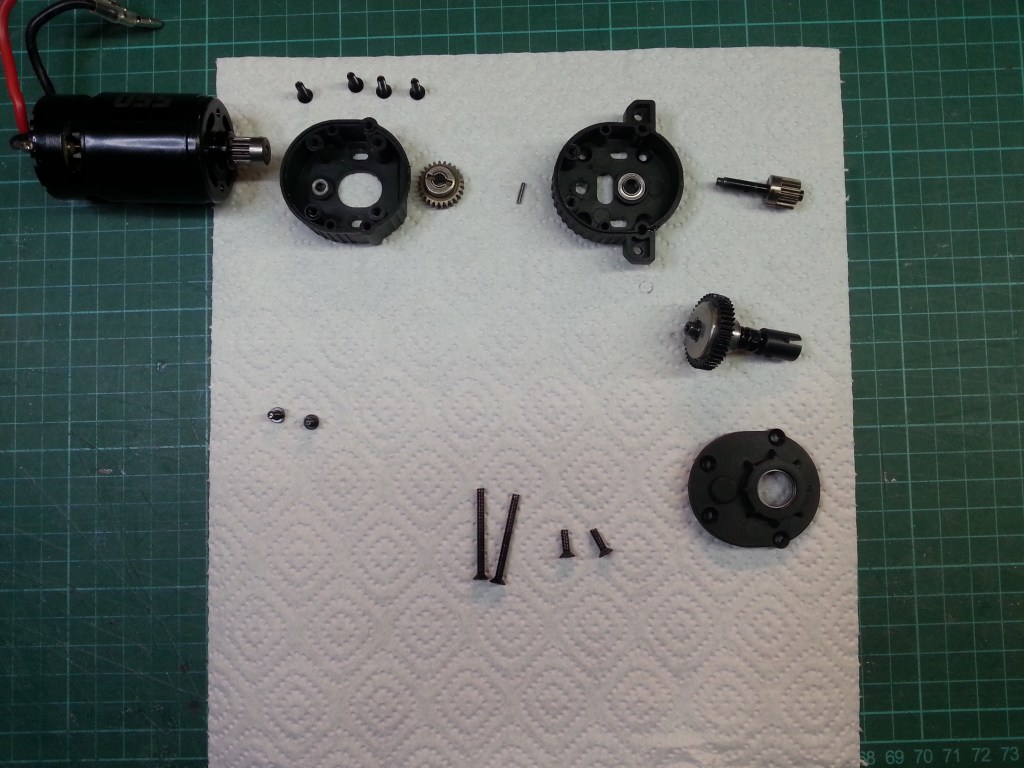
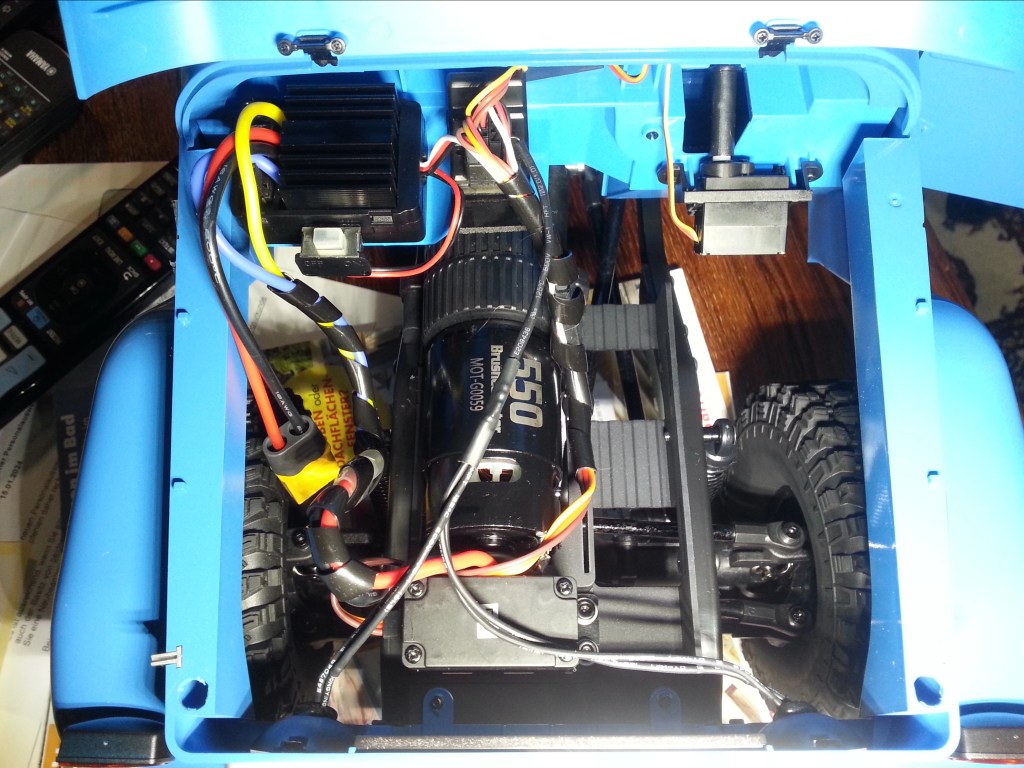
Um das optische Potential des Toyota-Modells voll zur Geltung zu bringen, spendierte ihm FMS zu öffnende Türen und Motorhaube. Beginnen wir demnach vorne. An allen voll beweglichen Türen, wurden kleine sehr realistische Scharniere verbaut. Beim Öffnen der Motorhaube, die mit zwei Stiften im Bereich der Scheinwerfer fixiert ist, zeigt sich der vorne längs eingebaute 550 er Elektromotor mit 35T (Wicklungen). Er ist mit einem Planetengetriebe verschraubt, dass sich nahtlos an den Motor anschließt. Das Motorritzel mit 14 Zähnen greift in zwei übereinander angeordnete Wellen. Die so insgesamt 4 Ritzel untersetzen den Motor auf ein Übersetzungsverhältnis von 1:4,8.
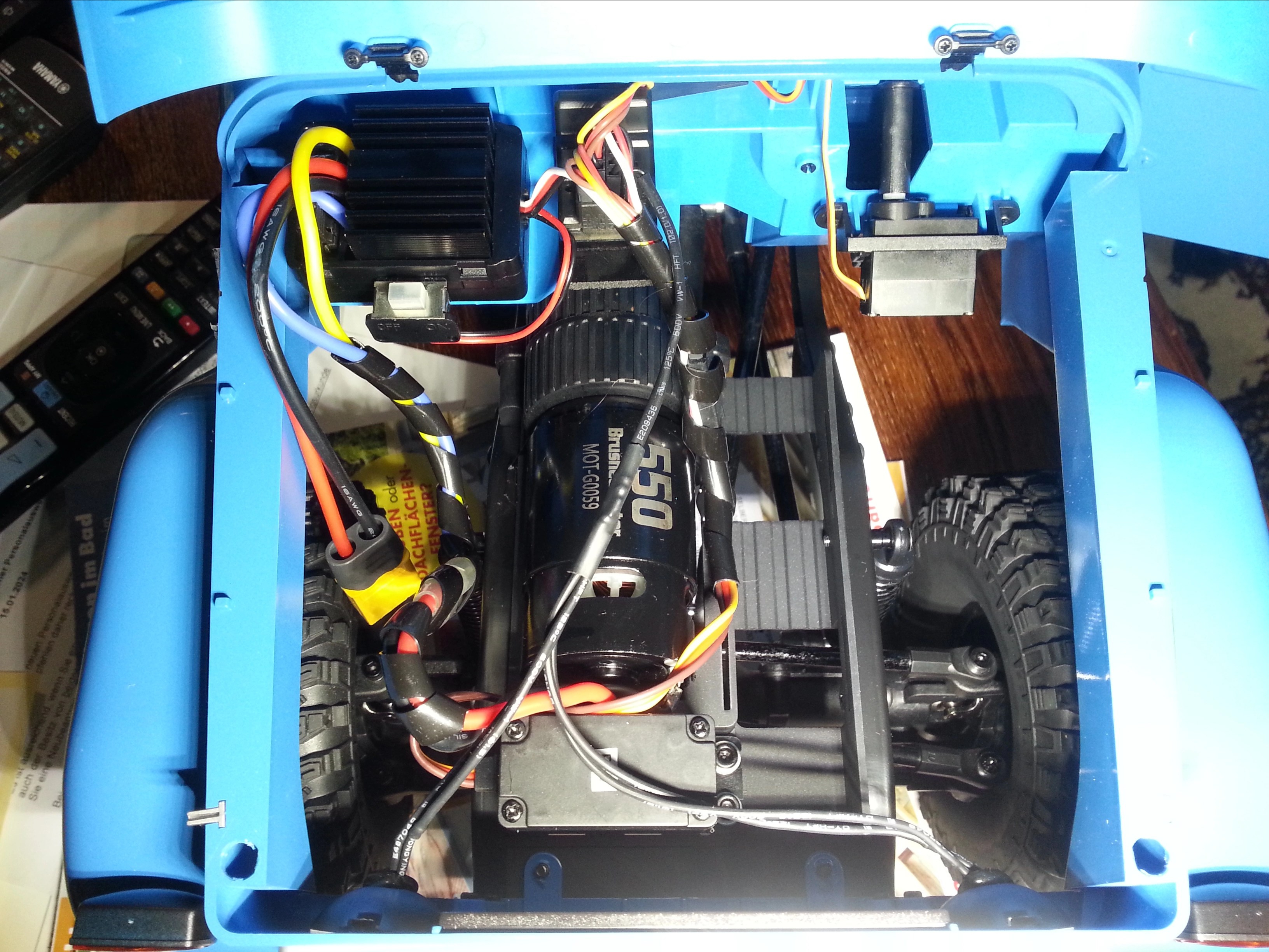
Außer der Motor-, Getriebeeinheit ist die komplette Elektronik im Motorraum untergebracht. Oben links der 1040er Fahrtregler, in der Mitte der 4-Kanal-Empfänger und rechts ein Microservo, dass parallel zum Lenkservo geschaltet ist. Das Lenkrad im Innenraum folgt so synchron, den Lenkeinschlägen an den Vorderrädern. Ein eher unauffälliges Detail, dass zunächst nicht auffällt. Erst wenn eine Fahrerfigur mit dem Lenkrad verbunden ist und das Auto scheinbar lenkt, gibt es strahlende Augen. Hinter dem Kühlergrill steht das eigentlich Lenkservo. Rechts vom Motor gibt es eine Schale für das Antriebsakku. Hier lassen sich stattliche Energiespeicher unterbringen, die lange Fahrzeiten sicherstellen. Das geschulte Modellbauerauge sieht hier schon die ersten Baustellen. Sicher nicht notwendig, aber das Salz in der Suppe. Dazu in weiteren Beiträgen entsprechende Schritte.
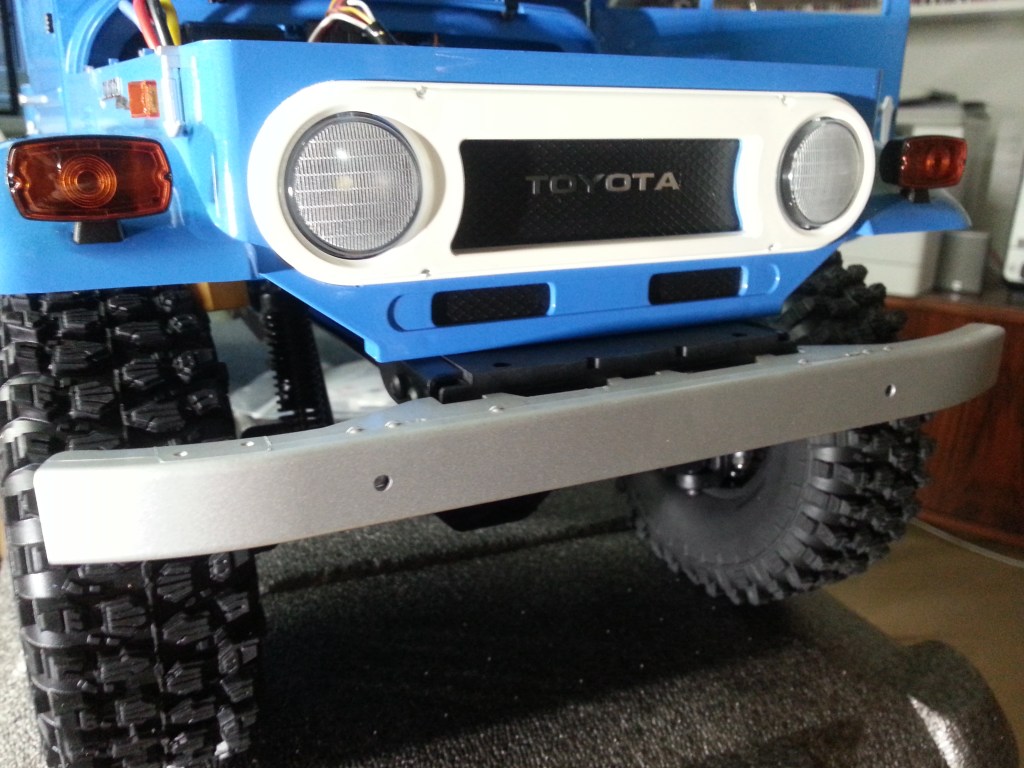
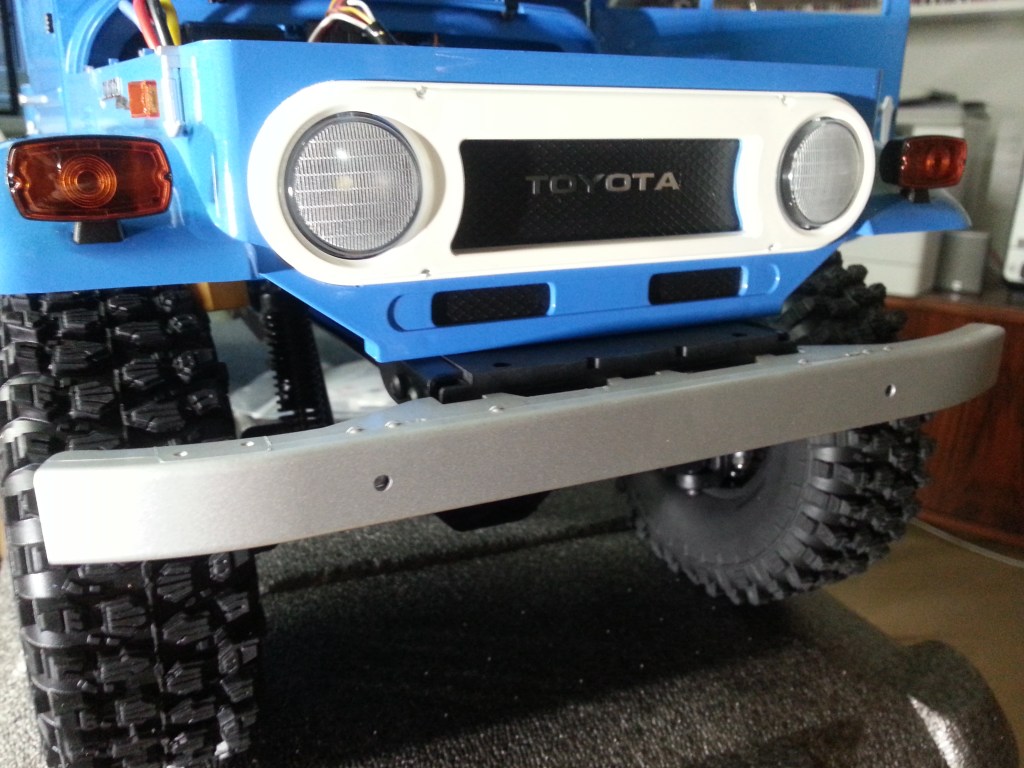
Abschließend am Kühlergriff, beidseitig weiße LEDs in den Scheinwerfergehäusen. Sie sind direkt 2-polig mit dem Empfänger verbunden, also nicht schaltbar. Sie sind somit unmittelbar nach einschalten des Fahrtreglers aktiviert. Die warmweiß leuchtenden LEDs entsprechen somit auch optisch dem Stand älterer Scheinwerferbirnen. Allerdings bleiben so Nachtfahrten ein düsteres Vergnügen und dienen höchstens als Positionslicht für die Person am Sender, sehr gewöhnungsbedürftig. Zwei freie Kanäle am Sender, ein Ein-Aus-Schalter und ein weiterer 3-Wege-Schalter, lassen aber Spielraum für u.a. den Einbau eines fernbetätigten Lichtschalters.
Gehen wir einen Schritt weiter zum vorderen Innenraum. Nach dem Öffnen der Tür, mittels eines drehbaren Türgriffes, wird der wunderschön gestaltete Innenraum sichtbar. Hier kann sich jeder selbst ein Bild vom gebotenen Niveau machen. Perfektionisten wie ich, sehen schon die Stellen, an denen noch Farbe fehlt und auch ganz sicher kommen wird. Das Fahrerhaus ist aus vielen Einzelteilen verschraubt. Das erleichtert die detaillierte, farbliche Gestaltung, ganz nach persönlichen Vorstellungen und Möglichkeiten. Die hier schwarze Türinnenverkleidung ist eigentlich keine Verkleidung, sondern in Realität nacktes lackiertes Blech. Ganz wie der Rest des Innenraumes. Ein spartanisches Arbeitsgerät also, dass von Toyota seinerzeit als Erweiterung des für sonstige PKW nicht nutzbaren unbefestigten Terrains erdacht wurde. Die Form folgt der Funktion, in seiner ursprünglichsten Umsetzung.

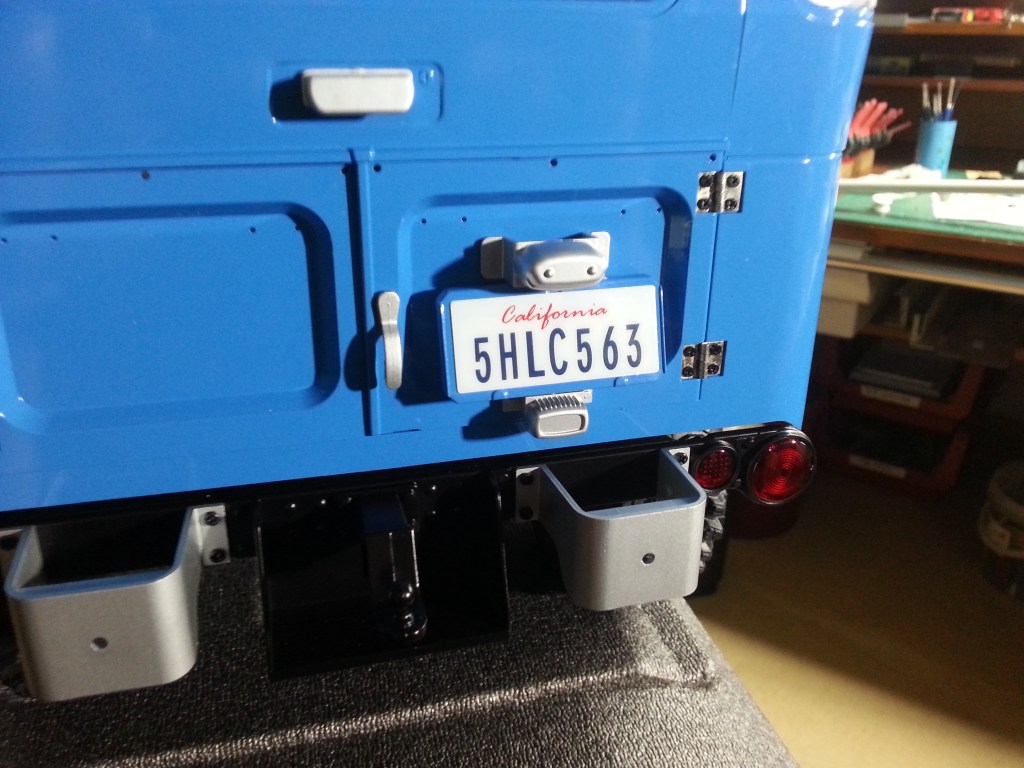
Auch die Rückseite und die Ladefläche haben viel fürs Auge und den Spieltrieb zu bieten. Rück-, und Blinklichter, hier leider noch ohne LEDs, eine detaillierte Nummernschildbeleuchtung, leider gänzlich ohne Lichtoption, eine dreiteilige Heckklappe. Zwei Türen unten und die nach Oben schwenkende Klappe. Die Stoßstangen sind rundum aus Kunststoff. Besonders hinten sind alle Teile von der Trittstufe mit Anhängekupplung und die Leuchten im bruchgefährdeten Bereich. Auf- und Abfahrten an steilen Rampen schaufeln viel Erdboden talwärts. Ich befürchte, dass so demnächst auch die ersten Kunststoff-Kleinteile dabei sein werden. 😏
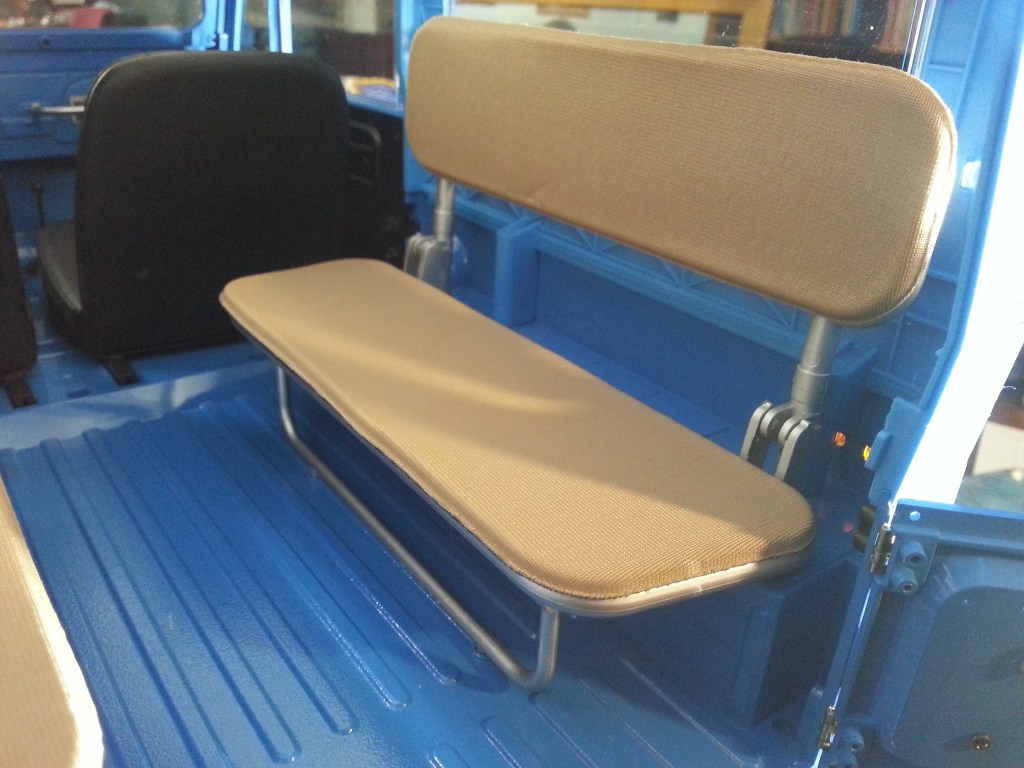
Im Gepäckraum zwei klappbare Sitzbänke für die Fondpassagiere, mit weichem, stoffähnlichem Bezug.

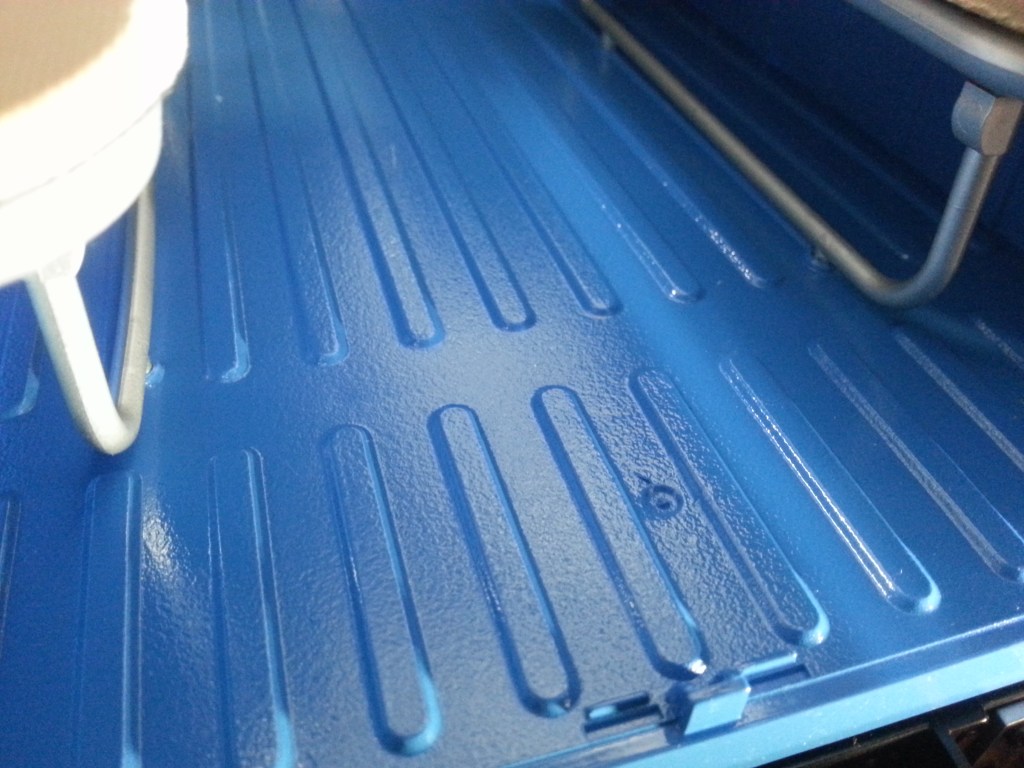
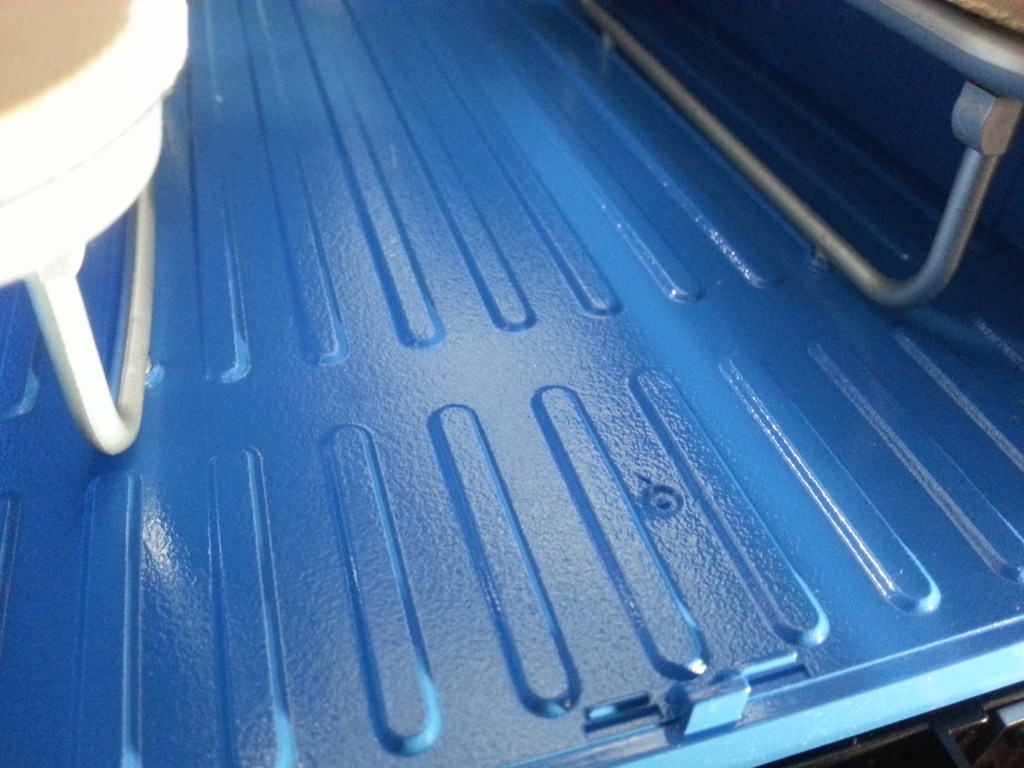
Gewollt oder ungewollt, das Bodenblech strukturiert und der Lack wie mit Unterbodenschutz vorbehandelt. Toll anzuschauen! Hier fehlen jetzt nur noch die unvergleichlichen Gebrauchsspuren eines unerbittlichen Arbeitsalltages.
Wird schnellstmöglich fortgesetzt…
English Version
FMS Toyota and its details
Sources:
To bring out the full visual potential of the Toyota model, FMS gave it opening doors and hood. So let’s start at the front. Small, very realistic hinges have been installed on all fully movable doors. Opening the hood, which is fixed with two pins in the area of the headlights, reveals the 550 electric motor with 35T (windings) installed longitudinally at the front. It is bolted to a planetary gearbox that connects seamlessly to the motor. The motor pinion with 14 teeth meshes with two shafts arranged one above the other. The total of 4 pinions reduce the motor to a transmission ratio of 1:4.8.
Apart from the motor and gearbox unit, all the electronics are housed in the motor compartment. At the top left is the 1040 speed controller, in the middle the 4-channel receiver and on the right a microservo connected in parallel to the steering servo. The steering wheel in the interior thus follows the steering inputs on the front wheels synchronously. A rather inconspicuous detail that is not noticeable at first. Only when a driver figure is connected to the steering wheel and appears to be steering the car do eyes light up. The actual steering servo is located behind the radiator grille. To the right of the engine is a tray for the drive battery. This can hold a considerable amount of energy to ensure long driving times. The trained model builder’s eye can already see the first construction sites here. Certainly not necessary, but the salt in the soup. The corresponding steps will be described in further articles.
Finally, on the radiator grille, white LEDs in the headlight housings on both sides. They are connected directly to the receiver with 2 poles, i.e. they cannot be switched. They are therefore activated immediately after the speed controller is switched on. The warm white LEDs therefore also correspond visually to the status of older headlight bulbs. However, night driving remains a gloomy pleasure and serves at most as a position light for the person at the transmitter, which takes some getting used to. Two free channels on the transmitter, an on/off switch and a further 3-way switch, however, leave scope for the installation of a remote-controlled light switch, among other things.
Let’s go one step further to the front interior. After opening the door using a rotating door handle, the beautifully designed interior becomes visible. Here, everyone can get an idea of the standard on offer. Perfectionists like me can already see the places where paint is still missing and will certainly be added. The cab is screwed together from many individual parts. This facilitates the detailed, color design, according to personal ideas and possibilities. The black interior door trim here is not actually trim, but in reality bare painted sheet metal. Just like the rest of the interior. A Spartan workhorse that was conceived by Toyota at the time as an extension of the unpaved terrain that could not be used for other cars. The form follows the function, in its most original implementation.
The rear and the loading area also have a lot to offer for the eye and the play instinct. Rear lights and indicators, unfortunately still without LEDs here, detailed license plate lighting, unfortunately without any lighting option, a three-part tailgate. Two doors at the bottom and the flap that swings upwards. The bumpers are made of plastic all round, especially at the rear, all parts of the step with trailer coupling and the lights are in the breakable area. Going up and down steep ramps shovels a lot of soil downhill. I’m afraid that the first small plastic parts will be there soon.😏

Two folding benches in the luggage compartment for the rear passengers, with soft, fabric-like upholstery.
Intentionally or unintentionally, the floor panel is textured and the paint has been pre-treated as if with underbody protection. Great to look at! The only thing missing here are the incomparable signs of wear and tear from a relentless working day.
Will be continued as soon as possible…
Translation, with the kind support of deepl.com
 RC Crawler Modellbaublog