
English Version
Eine Runde durch meinen umfangreichen Werkzeugfundus, hat neue Begehrlichkeiten geweckt. Ja, in Form von Zuwachs, aber eben sehr klein. Das bedeutet, ich habe nach weiteren Vorlagen gesucht, deren Miniaturisierung nun auf dem Plan stehen. Da wären ein 1500 gr. Fäustel, ein Vorschlaghammer, der leider gerade auf einer anderen Baustelle wütet, eine Werkzeugkiste, eine Spitzhacke und ein Freischneider. Das ist ein motorbetriebenes Schneidegerät, mit dem hohe Gräser und Bewuchs geschnitten werden kann. Das erfordert natürlich einen Reserve-Kraftstoff- und Kettenöl-Behälter. Mutige Sätze, von denen ich noch nicht sicher bin, ob ich sie realisieren kann. Ich bin aber wild entschlossen. 😋
Jetzt ist aber zuerst ein kleines Werkzeug an der Reihe, ein Fäustel. Damit lässt sich ein Meißel dynamisieren und Stäbe im Boden versenken. Der darf natürlich in keiner Werkzeugkiste fehlen, also los!
Auch hier wieder Resteverwertung vom Feinsten. Eine übrig gebliebene Ecke, der vorangegangen Werkzeugproduktion, in Form von Forex und Holzstreifen der bisher ausgesägten Werkzeugstiele.
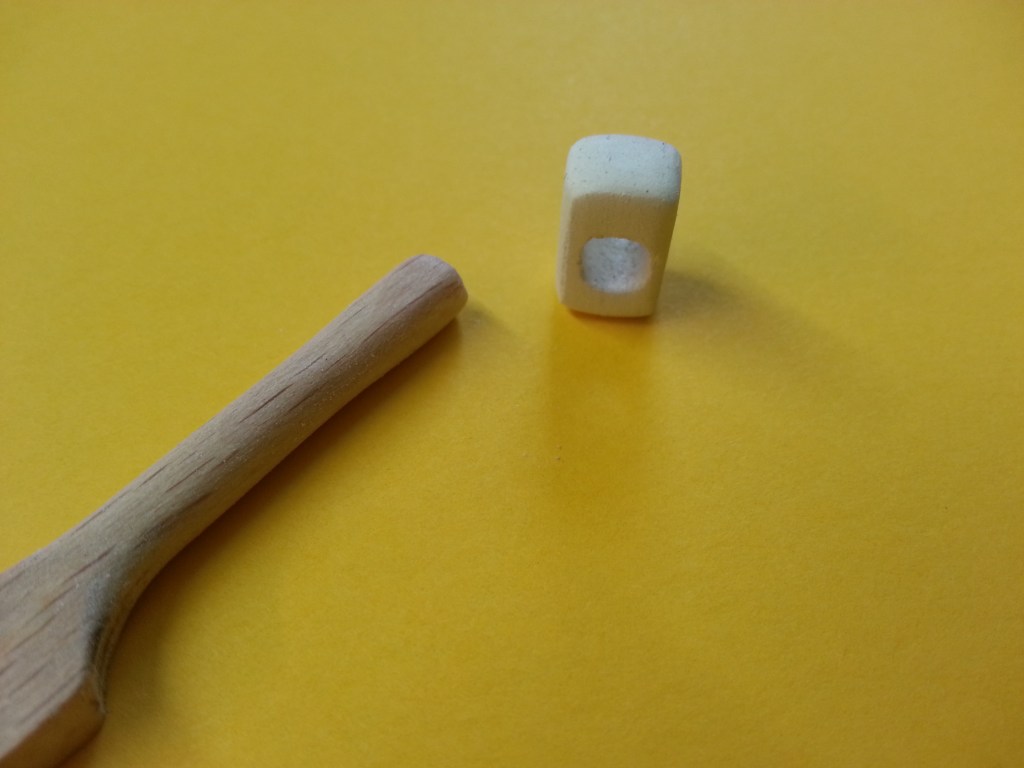
Die Bilder bedürften keiner weiteren Erläuterung. Zu erwähnen wäre höchstens der Aufwand, die Kontur im Bereich der Grifffläche zu schleifen. Wer schon einmal mit einem Fäustel gearbeitet hat, weiß um die Notwendigkeit dieser Profilierung und mit dem Ergebnis kann ich auch leben. Ich selbst bin ja mein größter Kritiker und selten zufrieden.
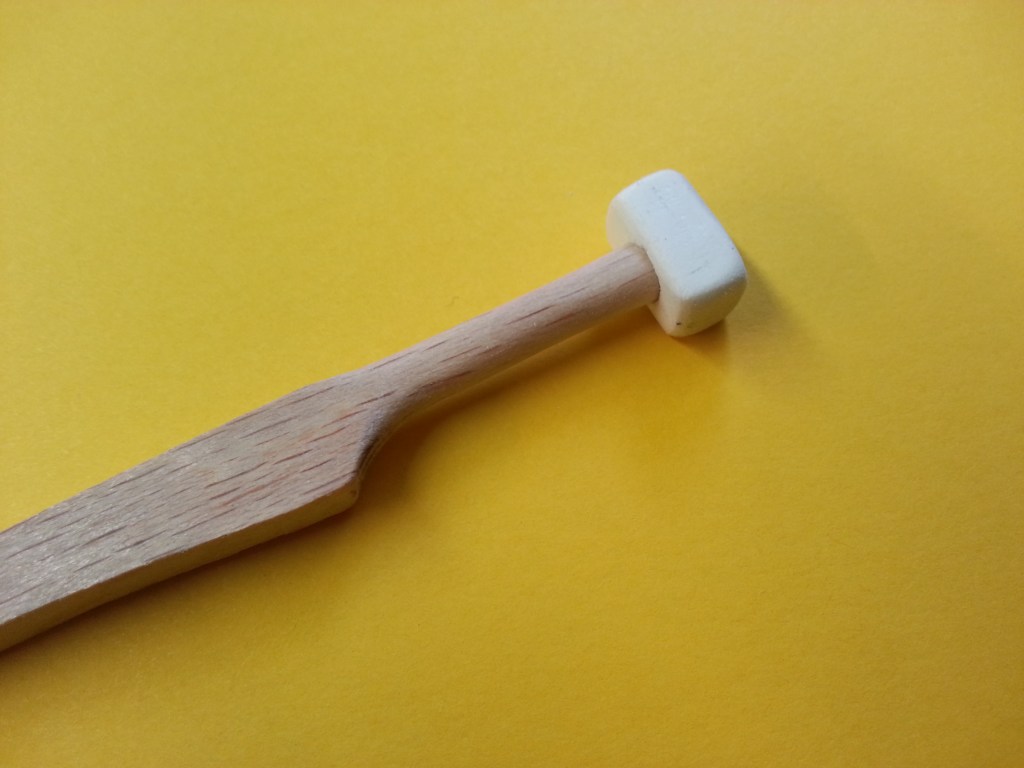
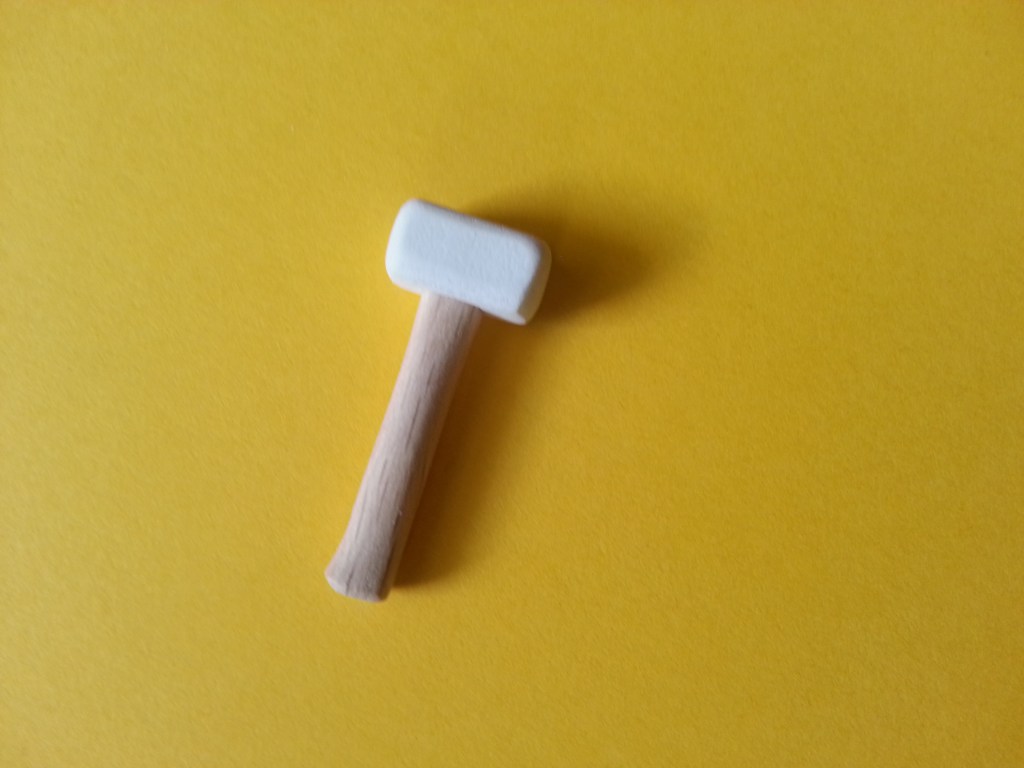
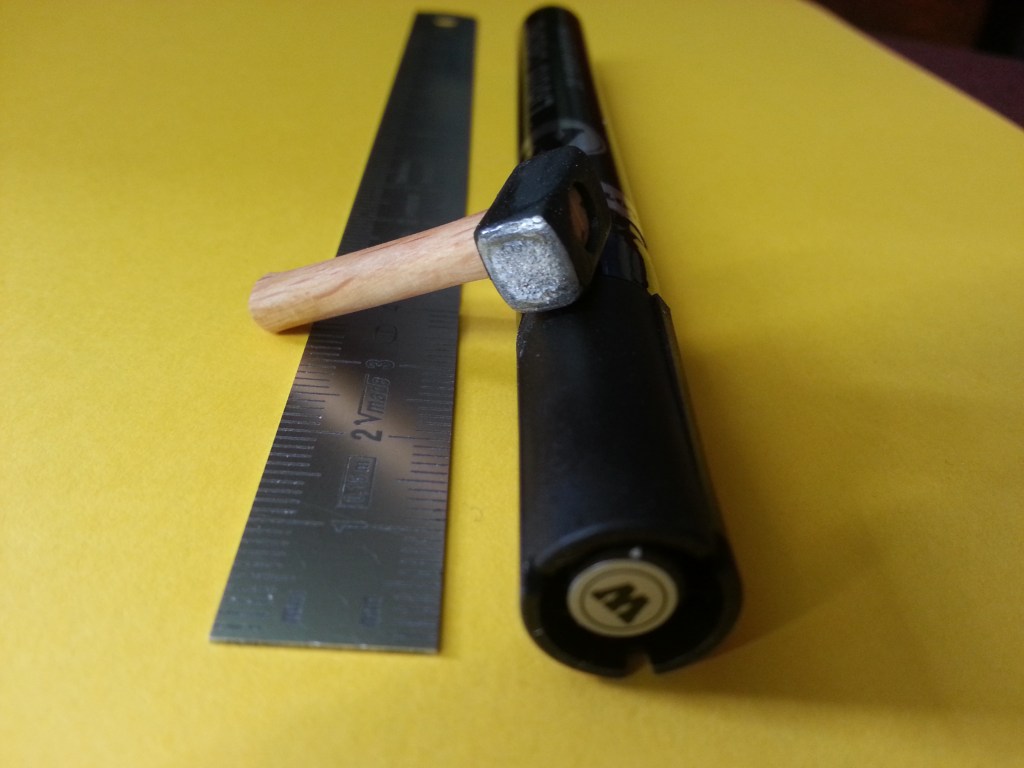
Die Oberfläche von Forex, mit noch gering verbliebenen Oberflächenspuren, ähnelt sehr dem von Werkzeugstahl, mit leicht rauer Oberfläche. Zum Abschluss noch einmal 2 Lagen Holzschutz-Öl für alle Holzstiele. Da wirkt die Maserung gleich noch einmal so schön und die Griffkontur wird auch besser sichtbar.
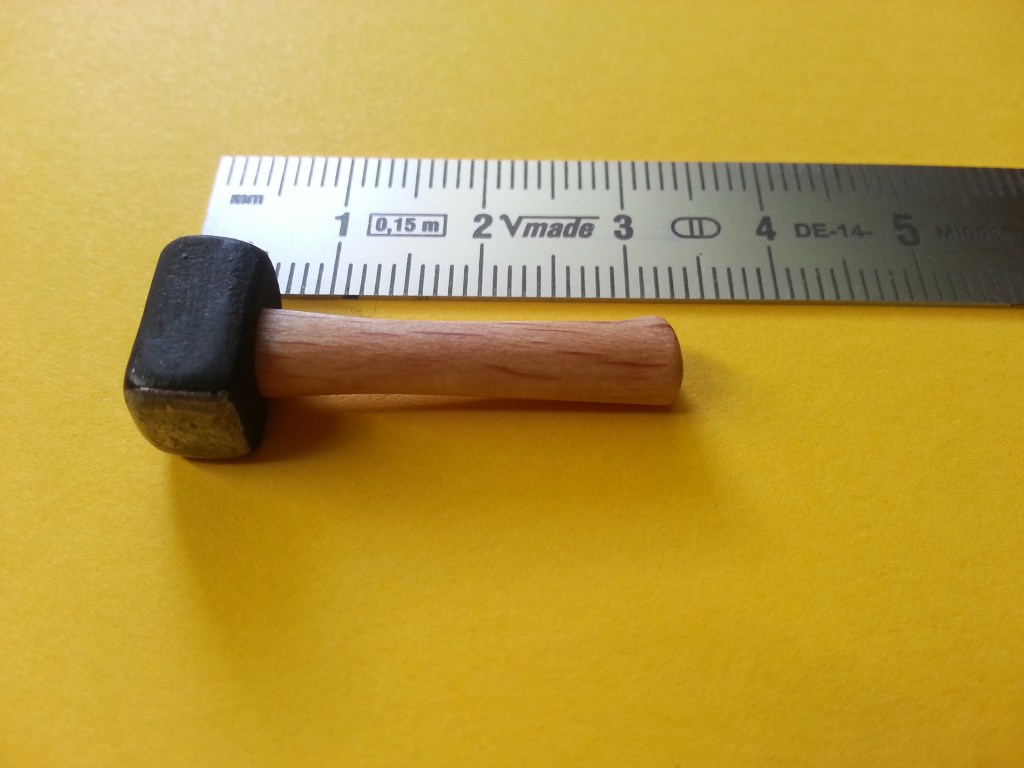
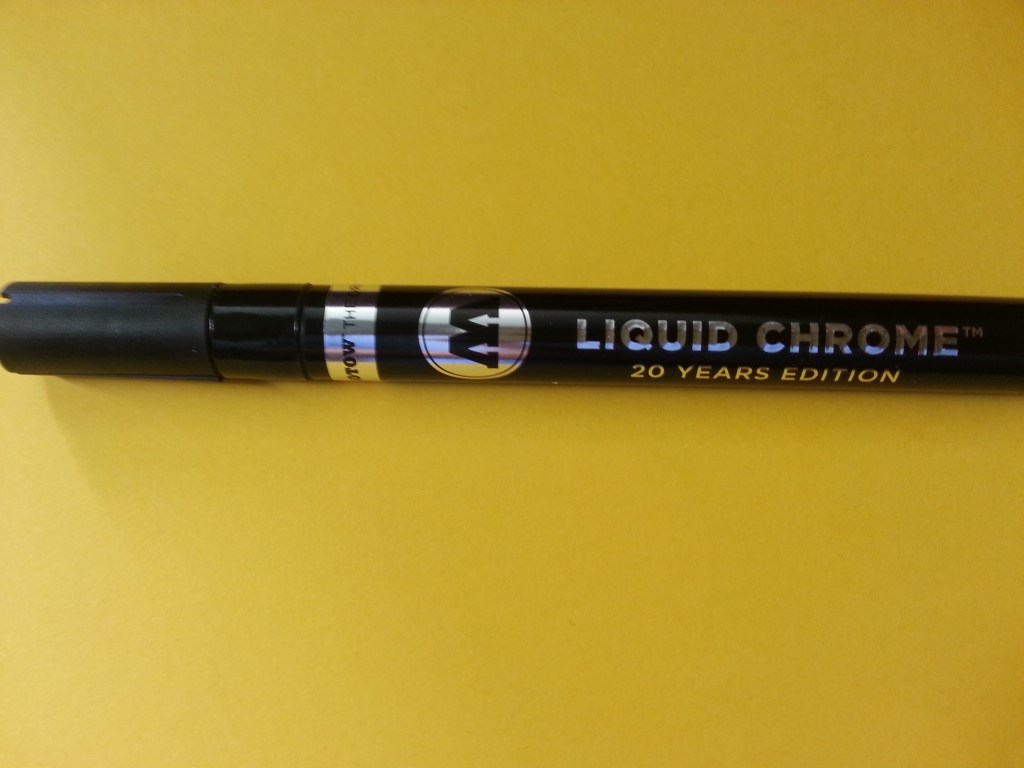
Für die Hervorhebung der geschliffenen Hammerbahnen, Schneiden und aller unlackierter Nutzflächen, verwende ich keine silberne Farbe, sondern einen Liquid Chrome-Stift. Der so entstandene Effekt wirkt realistisch, wie ich finde.
Jetzt mache ich an meiner Spitzhacke das Aufmaß. Wird schnellstmöglich fortgesetzt…
English Version
Manufacture of loads and tools, Part 4-Sledgehammer
A round through my extensive tool fund has awakened new desires. Yes, in the form of growth, but very small. This means that I have been looking for more templates, the miniaturisation of which is now on the agenda. There is a 1500 gr. hammer, a sledgehammer, which is unfortunately raging on another construction site, a toolbox, a pickaxe and a brush cutter. This is a motor-driven cutter that can cut tall grasses and overgrowth. The of course requires a spare fuel and chain oil tank. Bold propositions that I’m not yet sure I can realise. I’m hell-bent on it, though. 😋
But now it’s the turn of a small tool first, a hammer. It can be used to dynamise a chisel and sink rods into the ground. Of course, no toolbox should be without one, so let’s go!
Again, leftovers at their best. A leftover corner from the previous tool production, in the form of forex and strips of wood from the tool handles sawn out so far.
The pictures need no further explanation. At most, the effort to grind the contour in the area of the grip would have to be mentioned. Anyone who has ever worked with a hammer knows the necessity of this profiling and I can live with the result. After all, I myself am my biggest critic and rarely satisfied.
The surface of forex, with only slight surface traces remaining, is very similar to that of tool steel, with a slightly rough surface. Finally, 2 coats of wood preservative oil for all wooden handles. This makes the grain look even more beautiful and the contour of the handle is also more visible.
To highlight the sanded hammer tracks, cutting edges and all unpainted useful surfaces, I don’t use silver paint, but a Liquid Chrome pen. The resulting effect looks realistic, in my opinion.
Gallery
Now I’m making the measurements on my pickaxe. Will continue as soon as possible…
Translation, with the kind support of deepl.com
 RC Crawler Modellbaublog