
Eine Lieferung für den Truggy wurde sehnlichst erwartet, die Achsen. Nach ihrem Flug um die Welt, sind sie inzwischen eingetroffen. Im Gegensatz zu den Boom Racing Phat Axles, tragen diese Modelle das Emblem von ARB auf dem Achsgehäusedeckel. ARB ist ein australischer Hersteller von Zubehör für Geländefahrzeuge. Dazu gehören u.a. luftgesteuerte Differentialsperren. Bei ARB, Air Locker genannt. Im Gegensatz zu einem konventionellen Antrieb, wie bei vielen Geländewagen verbaut, ist Air Locker in der Realität ein sinnvolles Tuningteil. Dabei wirken zuschaltbare Differentiale an Vorder- oder Hinterachse und auch in Kombination, Traktionsverlusten einzelner Räder oder Achsen entgegen. Sehr anschaulich auf der Internetseite von ARB dargestellt.
Diese Technik ist natürlich nicht in den gelieferten Achsen verbaut und nur eine kurze Erläuterung des Namens ARB. Auch im Modellbereich wird sich natürlich gerne mit den Produkten renommierter Hersteller geschmückt, wenn oft auch nur aus optischen Gründen. Im weiteren Textbeitrag zeige ich aber auch eine weitere Tuning-Variante, die beim Modell und Original identisch sind. Nun aber zunächst die beiden Achsen aus der Nähe. Beginnend mit der Vorderachse.
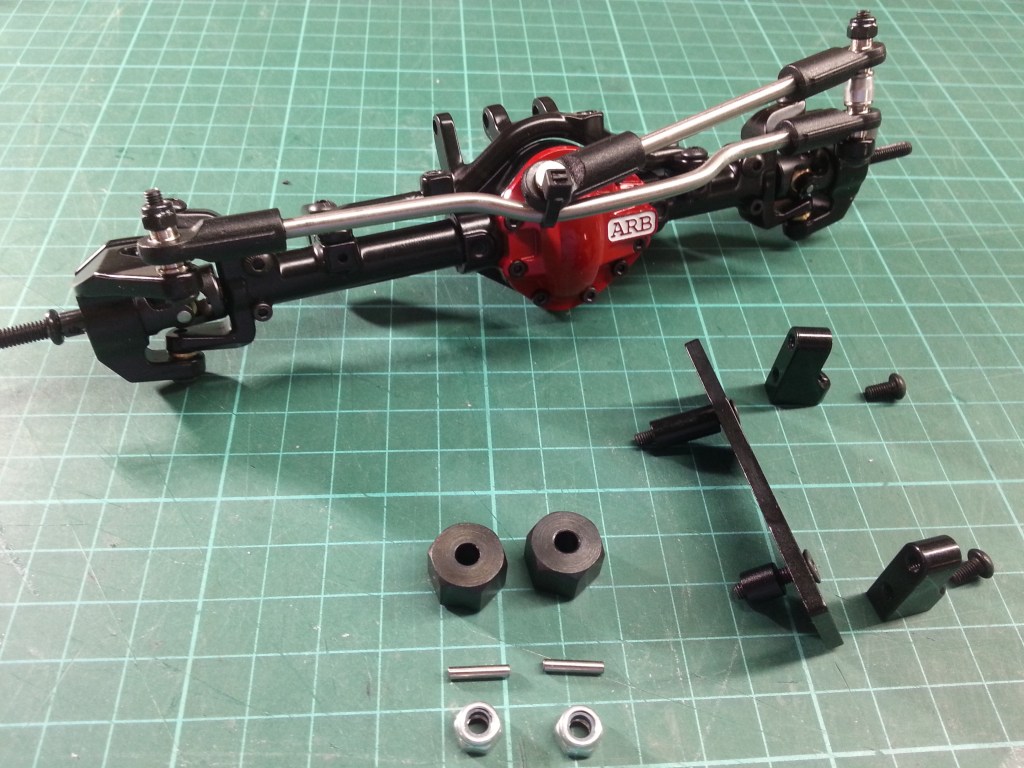
Neben dem Achsenkörper, sind auch die beiden Vierkante für die Felgenaufnahme, den Fixierstiften und Achsmuttern enthalten. Rechts im Bild, die optionale Befestigungsmöglichkeit für das Lenkservo, direkt auf der Vorderachse. Das wird von mir nicht verbaut und wandert in das Ersatzteillager.
Die Hinterachse.
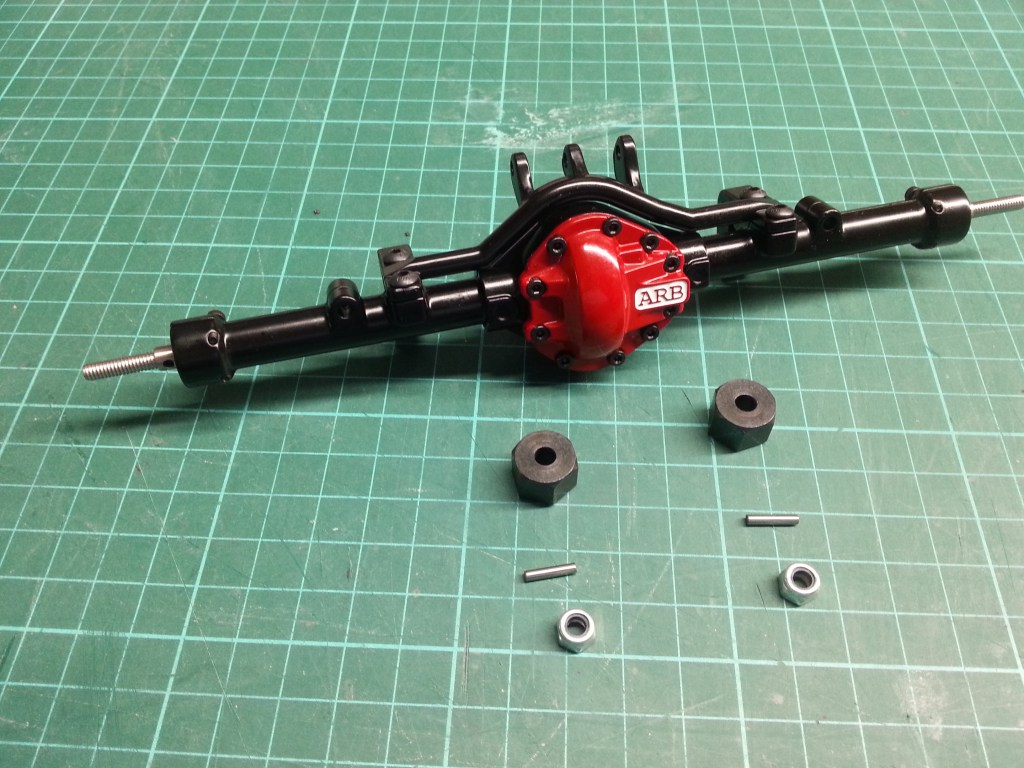
Wie auch an der Vorderachse, sind alle zur Montage benötigten Teile vollständig beigefügt.
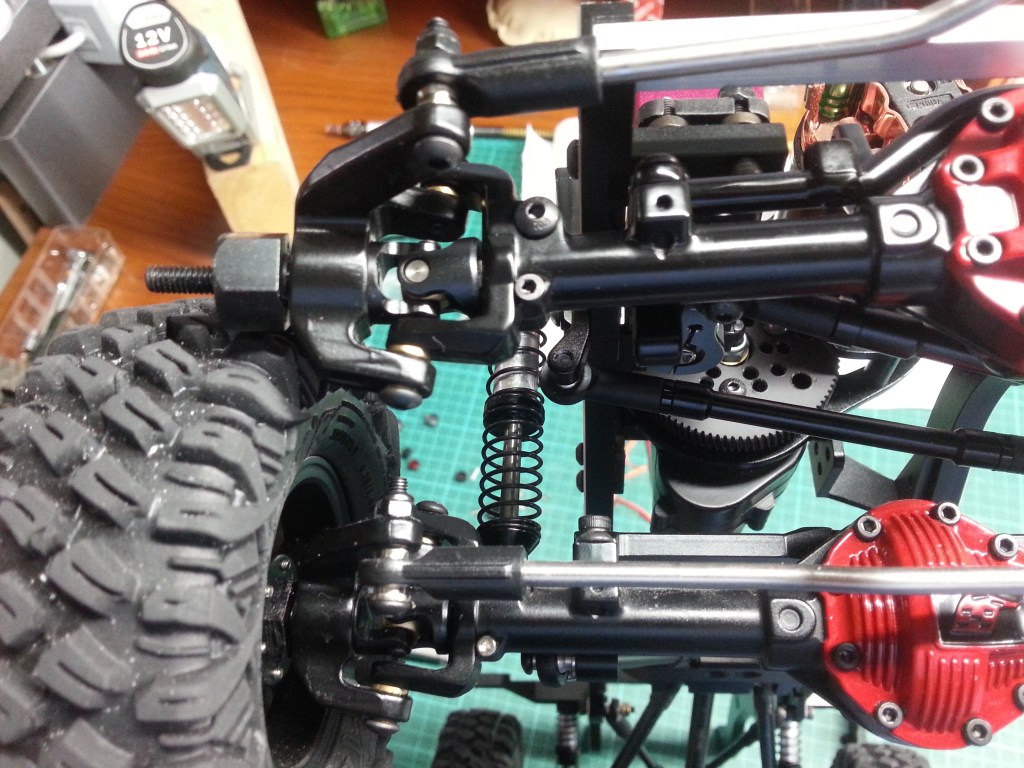
Meine Vergleiche mit den Boom Racing Phat Axles, ergaben keine erkennbaren Unterschiede. Ich würde mich sogar festlegen, bis auf die Optik des Gehäusedeckels, nahezu baugleich. Die beiden Vorderachsen im optischen Vergleich.
Die Hinterachse wurde soweit aufgerüstet und mit den Blattfedern und Dämpfern verbunden. Von den vier Lagen an Blattfedern, habe ich gleich drei weggelassen. Vierlagig müssten schon mehrere Kilo Auto aufgelastet werden, damit irgendeine Federbewegung möglich würde. Mit der verbliebenen Grundfeder, sollte es in Verbindung mit den Stoßdämpfern, dann hoffentlich vernünftig federn.
Nun zur hinteren Aufhängung. Zu Beginn habe ich schon auf ein Bauteil hingewiesen, dass im Original als auch am Modell nahezu identisch ist. Es ist ein Produkt der amerikanischen Firma Teraflex, dass vom RC-Hersteller RC4WD lizensiert wurde. Auch gleichzeitig eine Inspirationsquelle für wunderschöne Geländewagen. Anstelle einer beweglichen aber einfachen Lasche, kann sich die Blattfeder nach hinten und unten weiter strecken. Hier komplett entlastet.
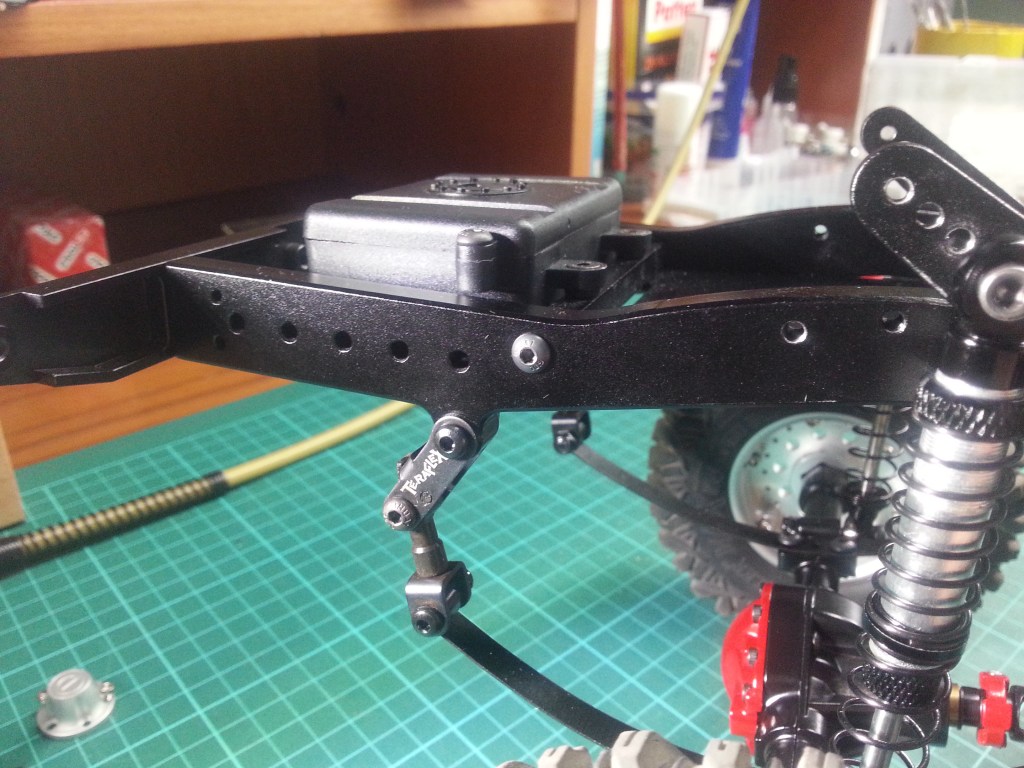
Die vordere Blattfederaufnahme ist starr am Rahmen befestigt und kann sich hier nur um seinen Drehpunkt bewegen. Wird die Blattfeder belastet, weicht sie somit nach hinten aus. Die ursprünglich einfache Lasche bewegt sich nach hinten, um den Längenausgleich zuzulassen. Auf den Bildern ist es das Bauteil mit dem Schriftzug Teraflex. Hier bis zum Anschlag belastet.
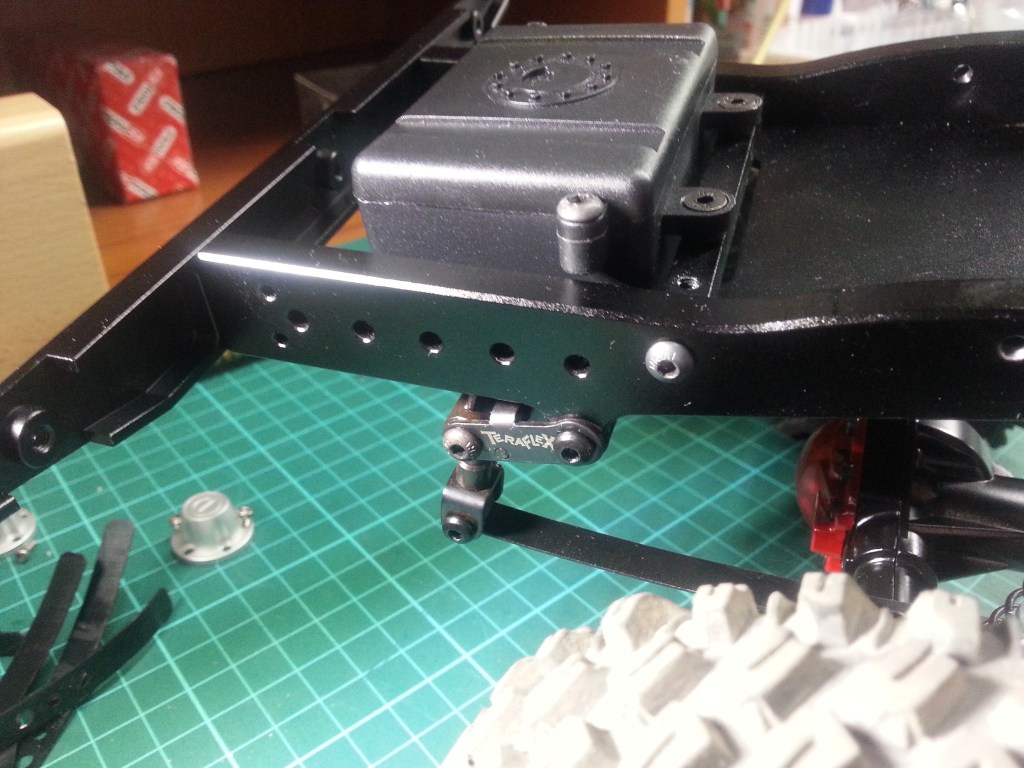
An ihm ist ein weiteres, drehbares Element angebracht, dass an der eigentlichen Blattfeder befestigt ist. Eine Blattfeder muss sich nicht nur nach oben und unten bewegen, sondern auch verdrehen.
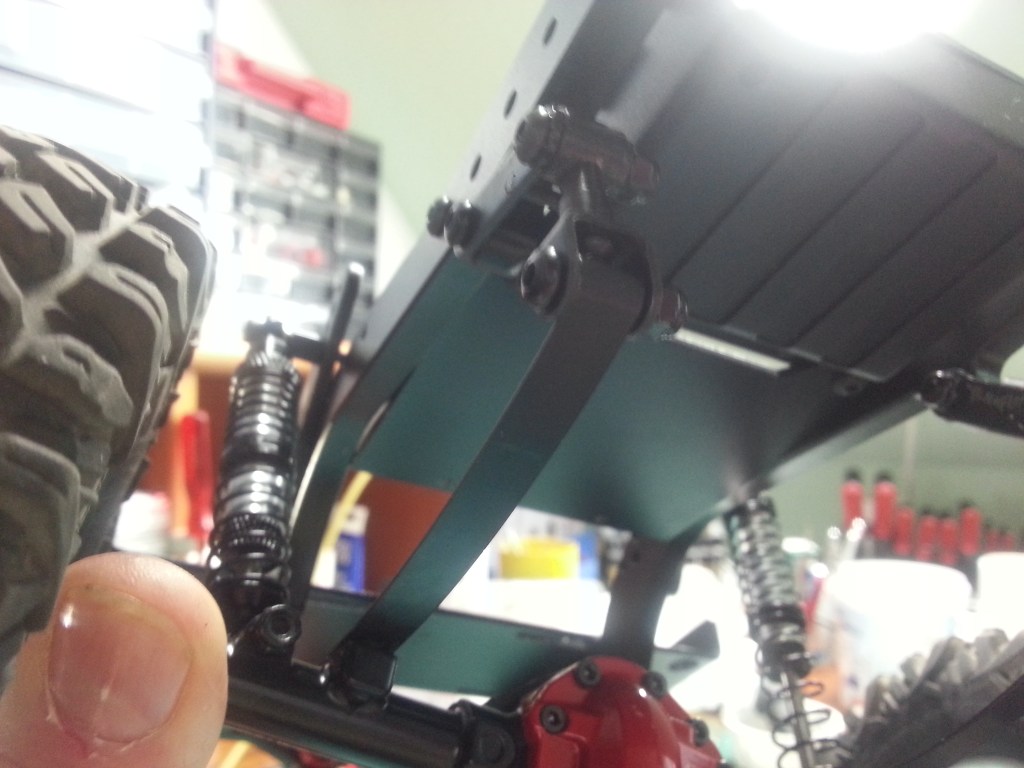
Dieses zusätzliche Gelenk erhöht den Bewegungsspielraum einer recht starren Blattfeder in einer weiteren Ebene. Der Verdrehung in sich.
Somit ist der Hinterbau des Truggy erst einmal vormontiert. Für die hinteren Dämpfer wurde zunächst eine noch provisorische Befestigung montiert. Die dortigen Dämpferdome wanderten an die Vorderachse.
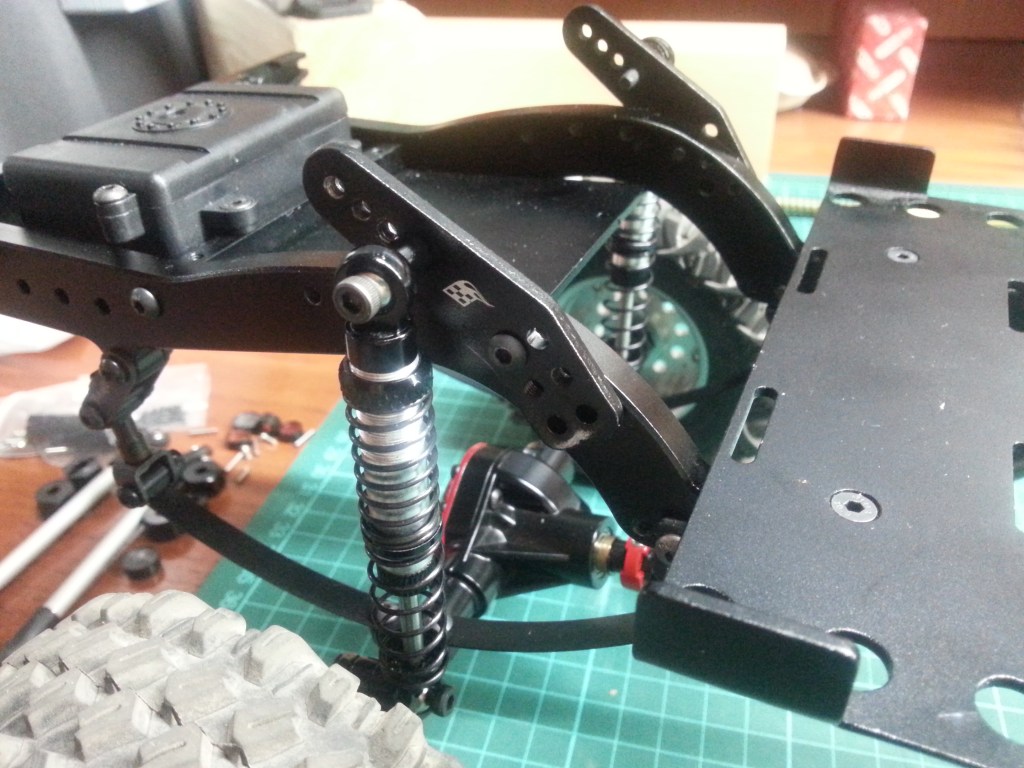
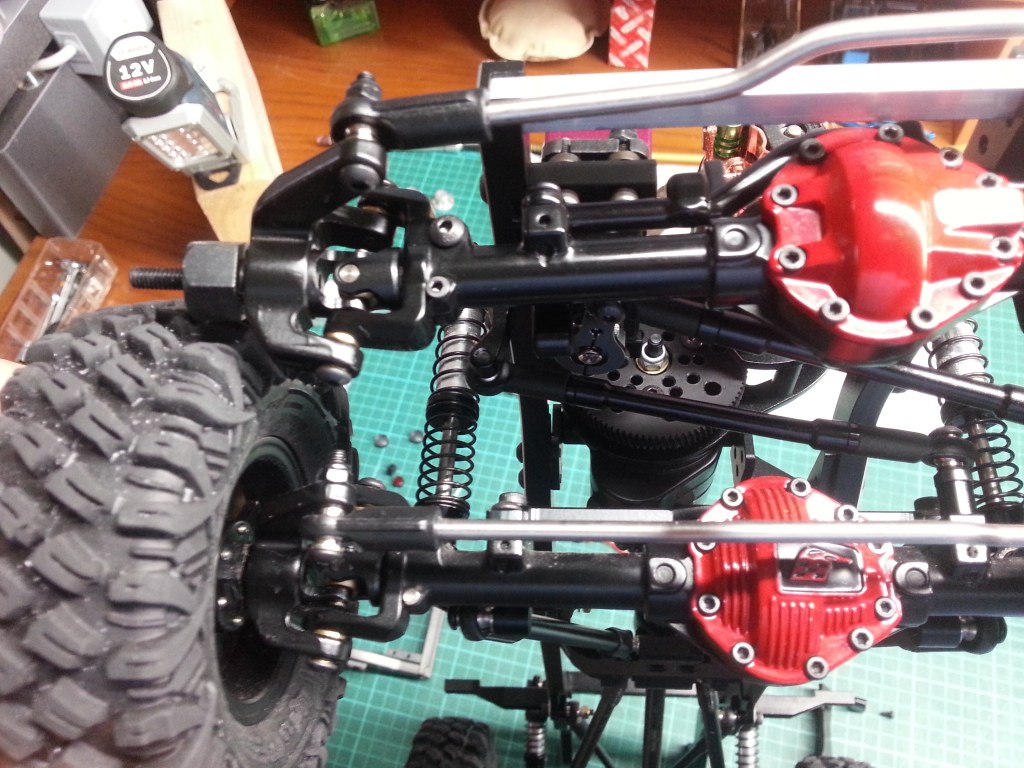
Dort wurden auch schon die unteren Achsstreben hergestellt und montiert. Mit den dort ebenfalls montierten Dämpfern steht das Fahrgestell nun auf seinen Rädern. Der Panhardstab ist auch bereits gebaut und montiert. Die noch fehlende Kardanwelle für die Vorderachse ist bestellt.
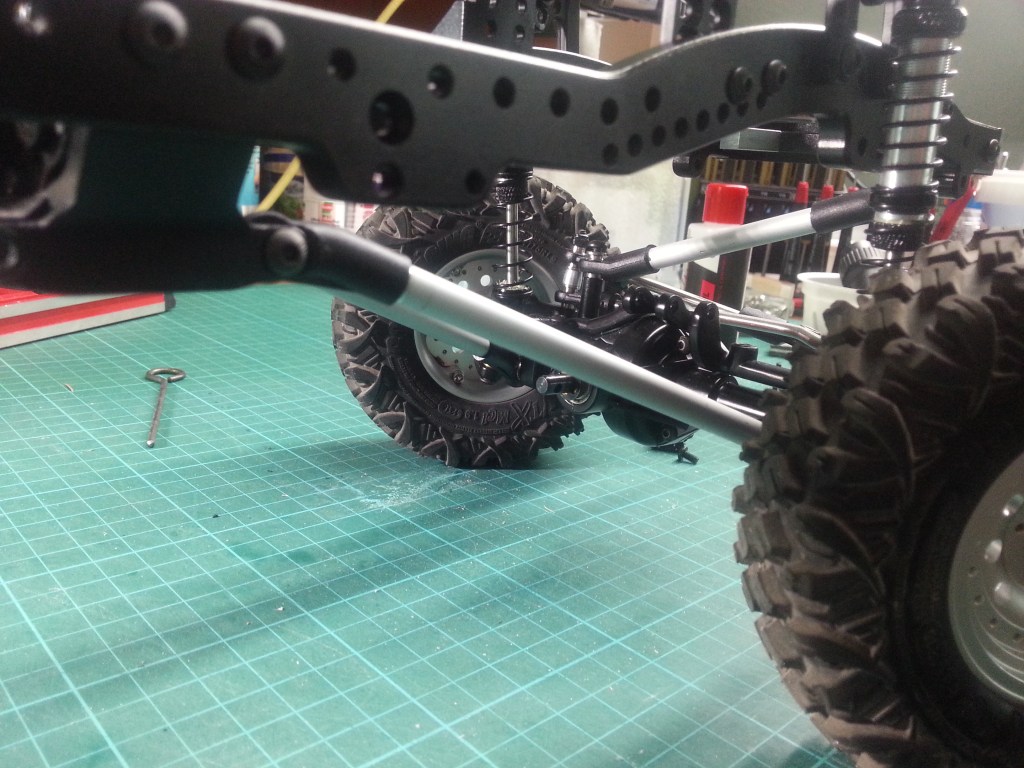
Die Bauschritte nähern sich dem späteren Ergebnis!?
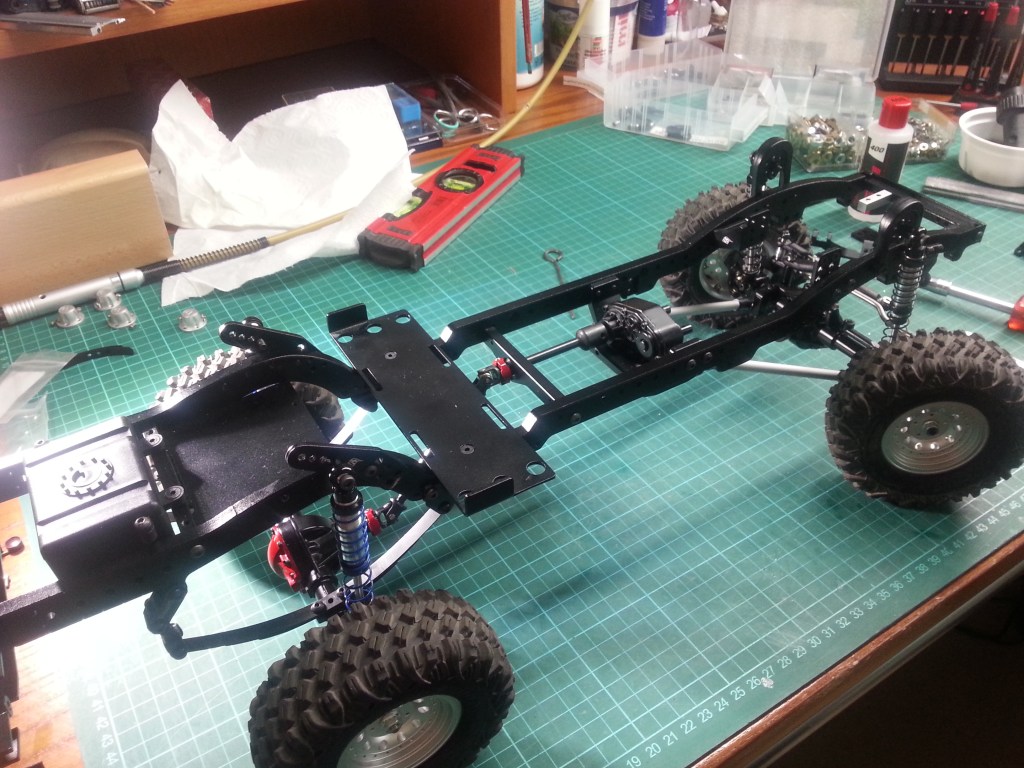
Mit grob fixiertem Fahrerhaus, leidet die Optik noch am fehlenden Heckaufbau. Auch die Reifen-Felgen-Kombination muss ich noch einmal überdenken. Sie sieht jetzt etwas verloren aus.
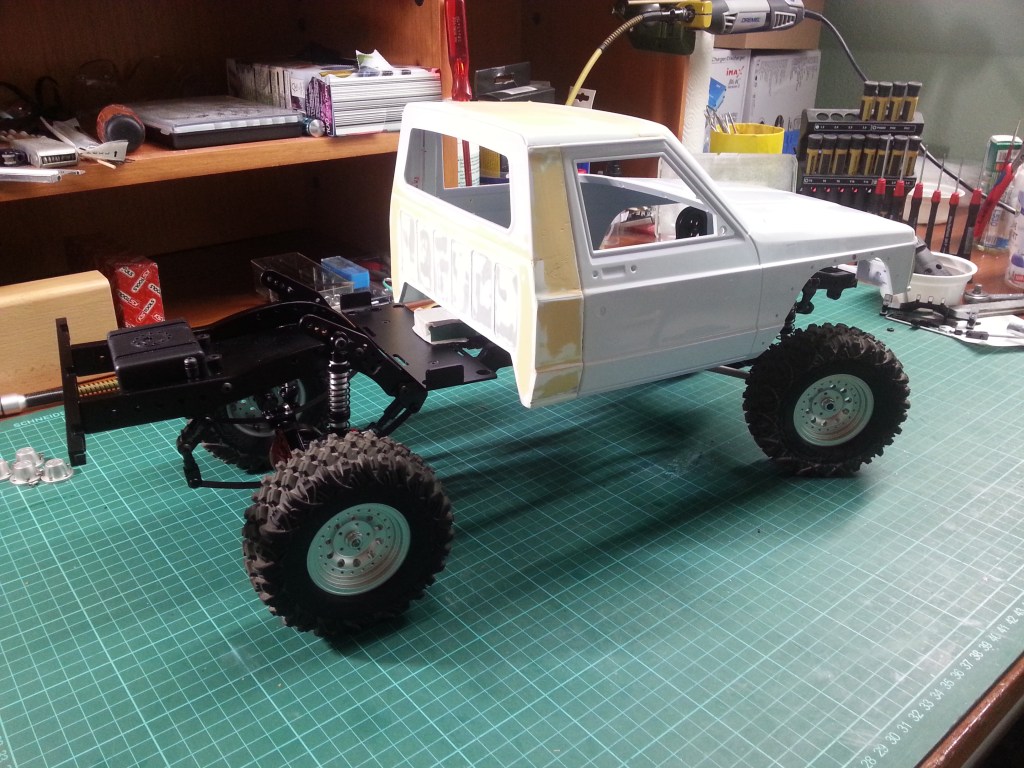
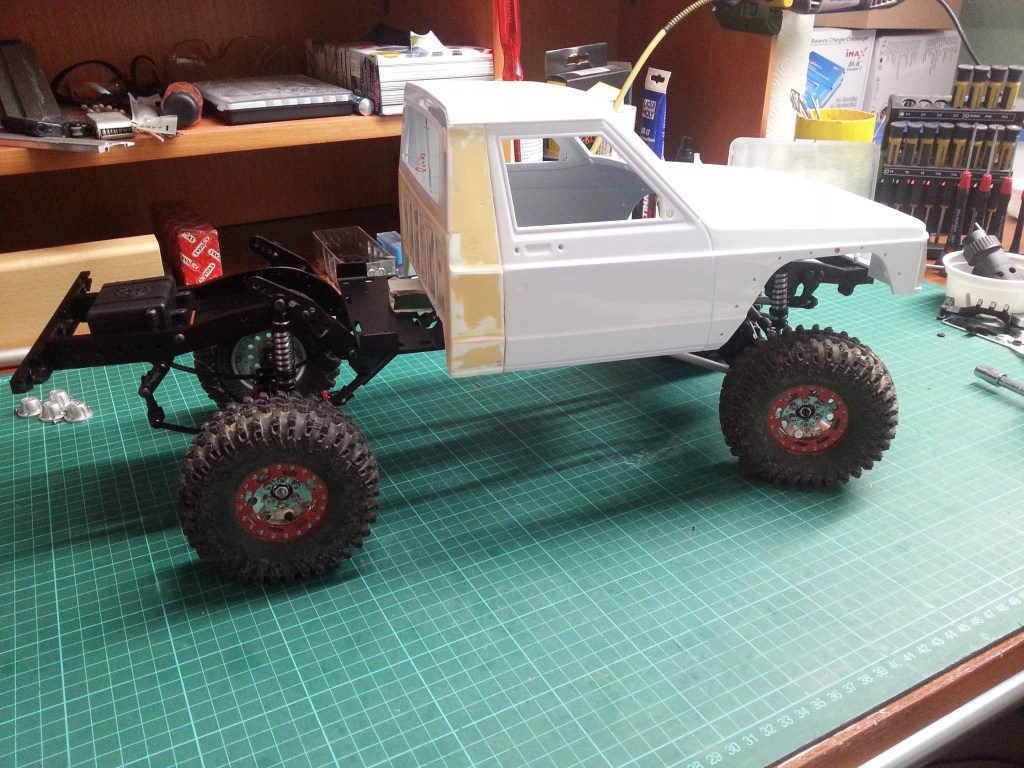
Mit dem Reifensatz des Marlin Crawlers, in der Größe nahezu gleich, ein völlig anderes Bild. Kleider machen wirklich Leute…
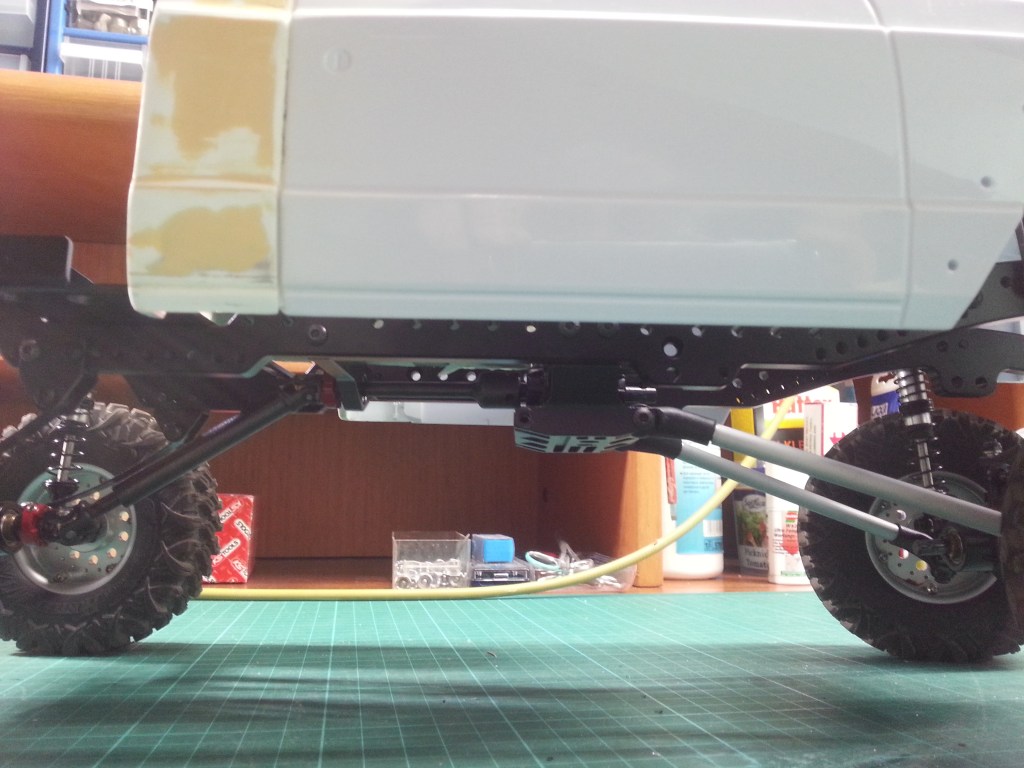
Auch die Optik des Unterbodens gefällt mir überhaupt nicht. Ein Fanghaken beim Rückwärtsfahren. Es bleibt also leider nicht bei der Resteverwertung, einige Neuteile werden wohl auch hier nötig…
Wird schnellstmöglich fortgesetzt…
English Version
The Comanche Truggy on axles
A delivery for the Truggy was eagerly awaited, the axles. After their flight around the world, they have now arrived. Unlike the Boom Racing Phat Axles, these models carry the ARB emblem on the axle housing cover. ARB is an Australian manufacturer of accessories for off-road vehicles. These include air operated differential locks. At ARB, called Air Locker. In contrast to a conventional drive, as installed in many off-road vehicles, Air Locker is in reality a useful tuning part. Engageable differentials on the front or rear axle, and also in combination, counteract the loss of traction of individual wheels or axles. Very clearly presented on the website of ARB.
This technology is of course not built into the delivered axles and only a short explanation of the name ARB. Also in the model area, people like to decorate themselves with the products of renowned manufacturers, even if often only for optical reasons. In the following text I will show another tuning part, which is identical in the model and original. But now let’s take a closer look at the two axles. Starting with the front axle.
Beside the axle body, the two squares for the rim mount, the fixing pins and axle nuts are included. On the right side of the picture, the optional mounting possibility for the steering servo, directly on the front axle. This is not installed by me and goes into the spare parts store.
The rear axle.
Like on the front axle, all parts needed for mounting are included.
My comparisons with the Boom Racing Phat Axles did not show any noticeable differences. I would even commit myself, except for the optics of the housing cover, almost identical in construction. The two front axles in optical comparison.
The rear axle was upgraded so far and connected to the leaf springs and dampers. Of the four layers of leaf springs, I left out three. Four layers would have to be loaded with several kilos of car to make any spring movement possible. With the remaining basic spring, it should then hopefully spring properly in connection with the shock absorbers.
Now to the rear suspension. At the beginning I have already pointed out a component that is almost identical in the original and on the model. It is a product of the American company Teraflex, which was licensed by the RC manufacturer RC4WD. Also a source of inspiration for beautiful off-road vehicles. Instead of a movable but simple tab, the leaf spring can extend further backwards and downwards. Here completely relieved.
The front leaf spring holder is rigidly attached to the frame and can only move around its pivot point. If the leaf spring is loaded, it thus deflects backwards. The originally simple flap moves to the rear to allow length compensation. In the pictures it is the component with the Teraflex logo. Here it is loaded to the stop.
There is another rotating element attached to it, which is attached to the actual leaf spring. A leaf spring must not only move up and down, but also twist.
This additional joint increases the range of motion of a rather rigid leaf spring in another plane. The twist in itself.
So the rear end of the truggy is pre-assembled first. For the rear shocks a still provisional mounting was mounted first. The Shock Mounting there were moved to the front axle.
There the lower axle struts were manufactured and mounted. With the dampers also mounted there, the chassis now stands on its wheels. The Panhard rod is also already built and mounted. The still missing cardan shaft for the front axle is ordered.
The construction steps are approaching the later result!?
With roughly fixed cab, the optics still suffers from the missing rear body. I also have to rethink the tire-rim combination. It looks a bit lost now.
With the tire set of the Marlin Crawler, almost the same size, a completely different picture. Clothes really make the man…
I also don’t like the look of the underbody at all. A catch hook when reversing. Unfortunately, it does not remain with the remainder utilization, some new parts are probably necessary also here…
Will be continued as soon as possible…
 RC Crawler Modellbaublog